Rising damp guide
Damp-Proof Courses Explained
A damp-proof course is intended to interrupt the upward movement of moisture through a wall. Many apparent DPC failures are actually caused by water getting around the barrier rather than through it.
Physical DPCs in older houses
Depending on age and construction, a house may contain slate, bituminous material, engineering brick or another physical barrier. It is therefore unwise to assume an older wall has no DPC simply because it is not immediately obvious.
Chemical DPCs
Chemical systems are introduced into suitable masonry or mortar to create a water-repellent zone. They can be a legitimate repair where rising damp has been properly diagnosed and the wall is suitable for the system.
How a DPC gets bypassed
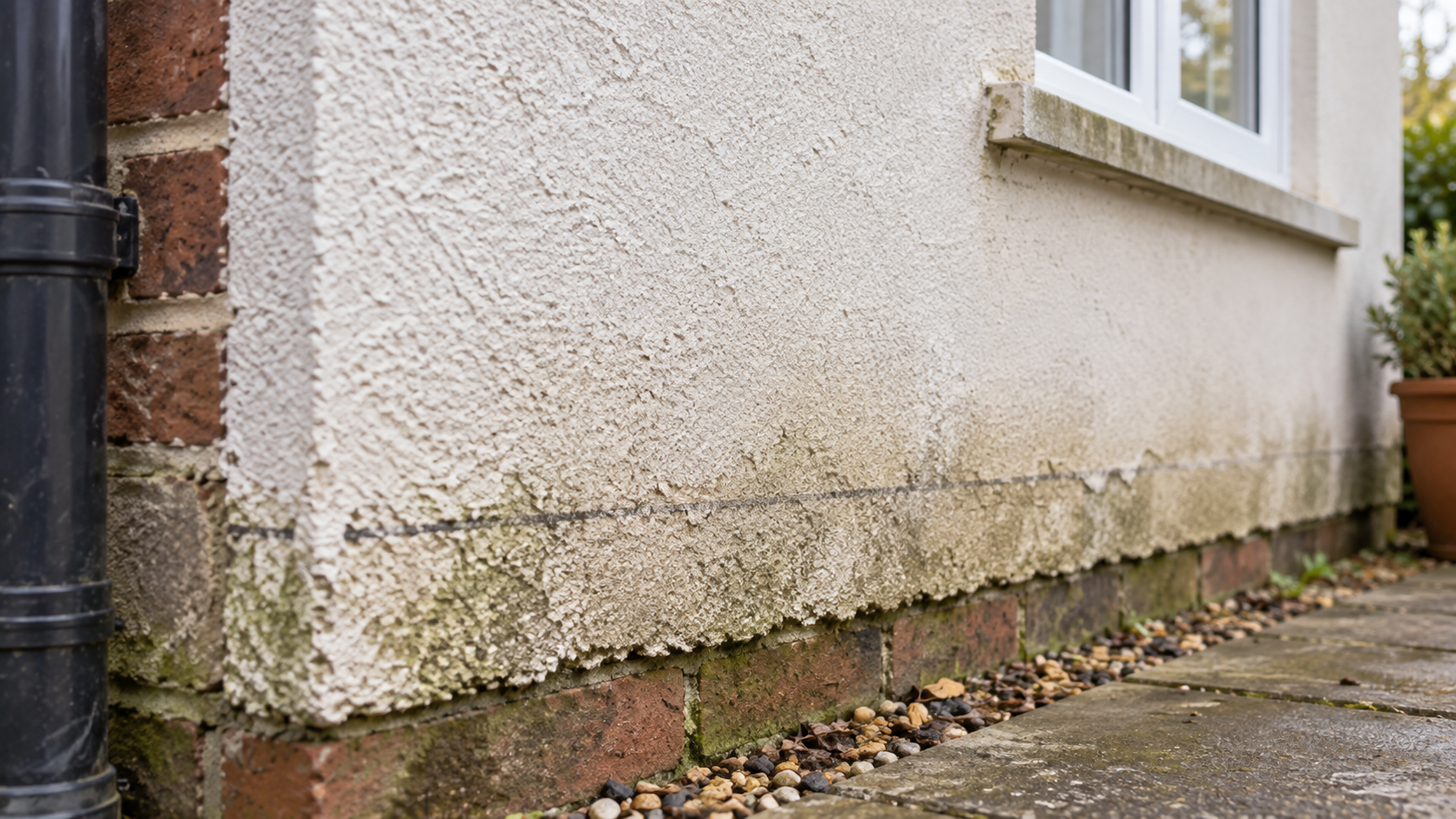
Raised paving, earth against the wall, render continuing below DPC level and debris inside a cavity can allow moisture to reach masonry above the barrier. In these cases the original DPC may still be intact.
Why the floor junction needs attention
The relationship between wall DPC and floor membrane matters, particularly after a solid floor has been renewed. Poor edge detailing can leave a damp strip at the wall-floor junction without proving that the wall DPC itself has failed.
Want somebody local to look at it?
If you would rather have the damp investigated in person, you can use our help page to describe the problem and decide what sort of specialist you need.