Rising damp guide
Signs of Rising Damp
The familiar picture is a band of damaged plaster close to the floor, but real houses rarely present such a tidy textbook pattern. Several signs together are more useful than any one symptom.
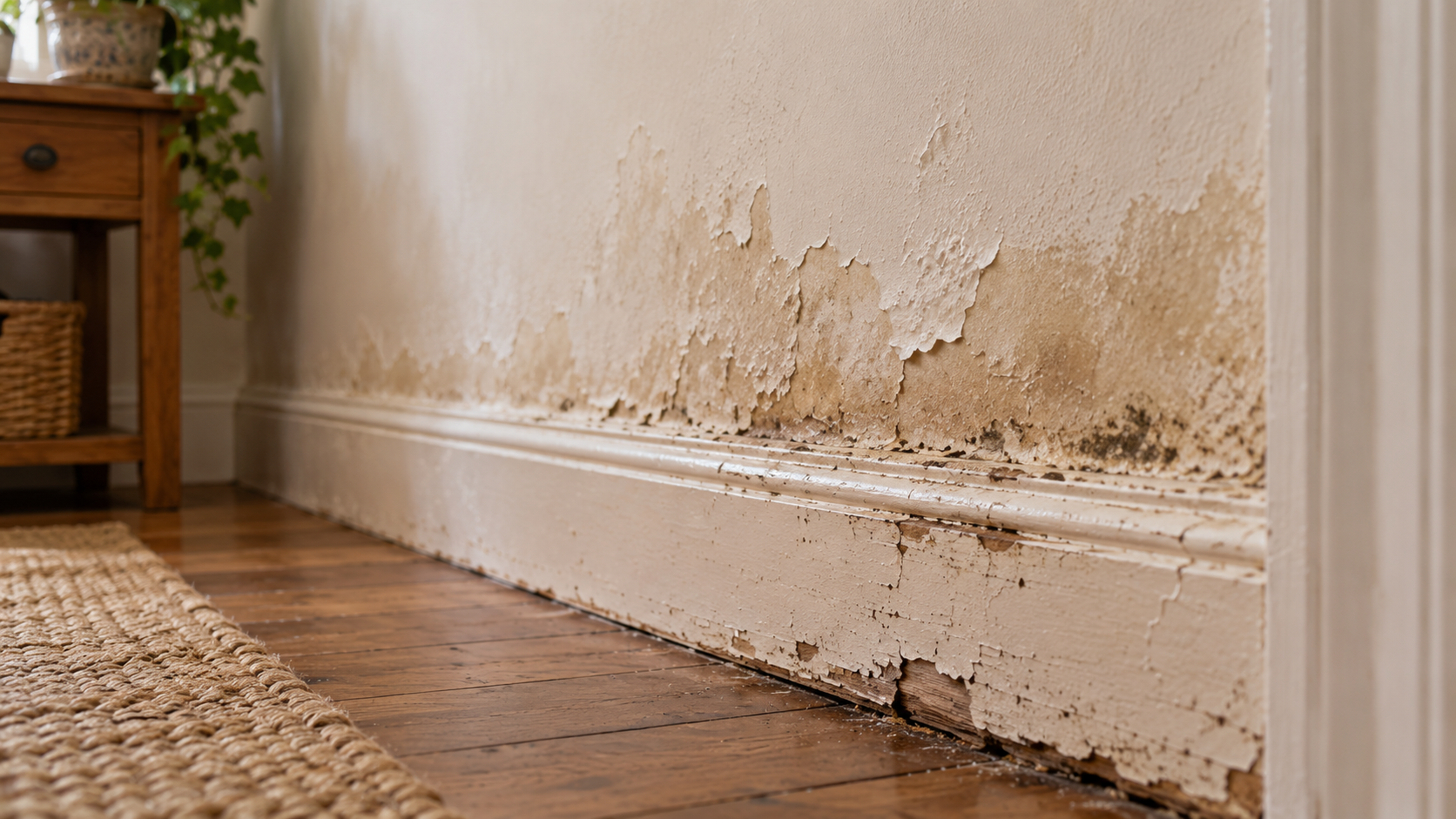
Damage at the base of the wall
Paint may blister, wallpaper may lift and plaster can soften or crumble. Skirting may swell or decay if it remains wet. The important detail is the distribution: is the problem spread along the wall or concentrated around one small area?
White salts and tide marks
Moisture moving through masonry can carry soluble salts into plaster. As water evaporates, some salts remain. A visible tide mark can be useful evidence, but salts also occur for other reasons, especially around old chimney breasts.
Mould is a different clue
Black surface mould in cold corners, around windows or behind furniture points much more strongly towards condensation. A property can have condensation and another damp fault at the same time, so mixed symptoms need care.
The outside wall matters
A path, drive or flower bed raised close to the damp-proof course can allow water to reach masonry above it. Render carried down into the soil can have a similar effect. These are easy details to miss if somebody looks only at the internal plaster.
Want somebody local to look at it?
If you would rather have the damp investigated in person, you can use our help page to describe the problem and decide what sort of specialist you need.