Rising damp guide
Rising Damp Treatment
Treatment should match the route the moisture is actually using. Sometimes that means a new DPC. Sometimes the more important work is outside the wall or in the plaster.
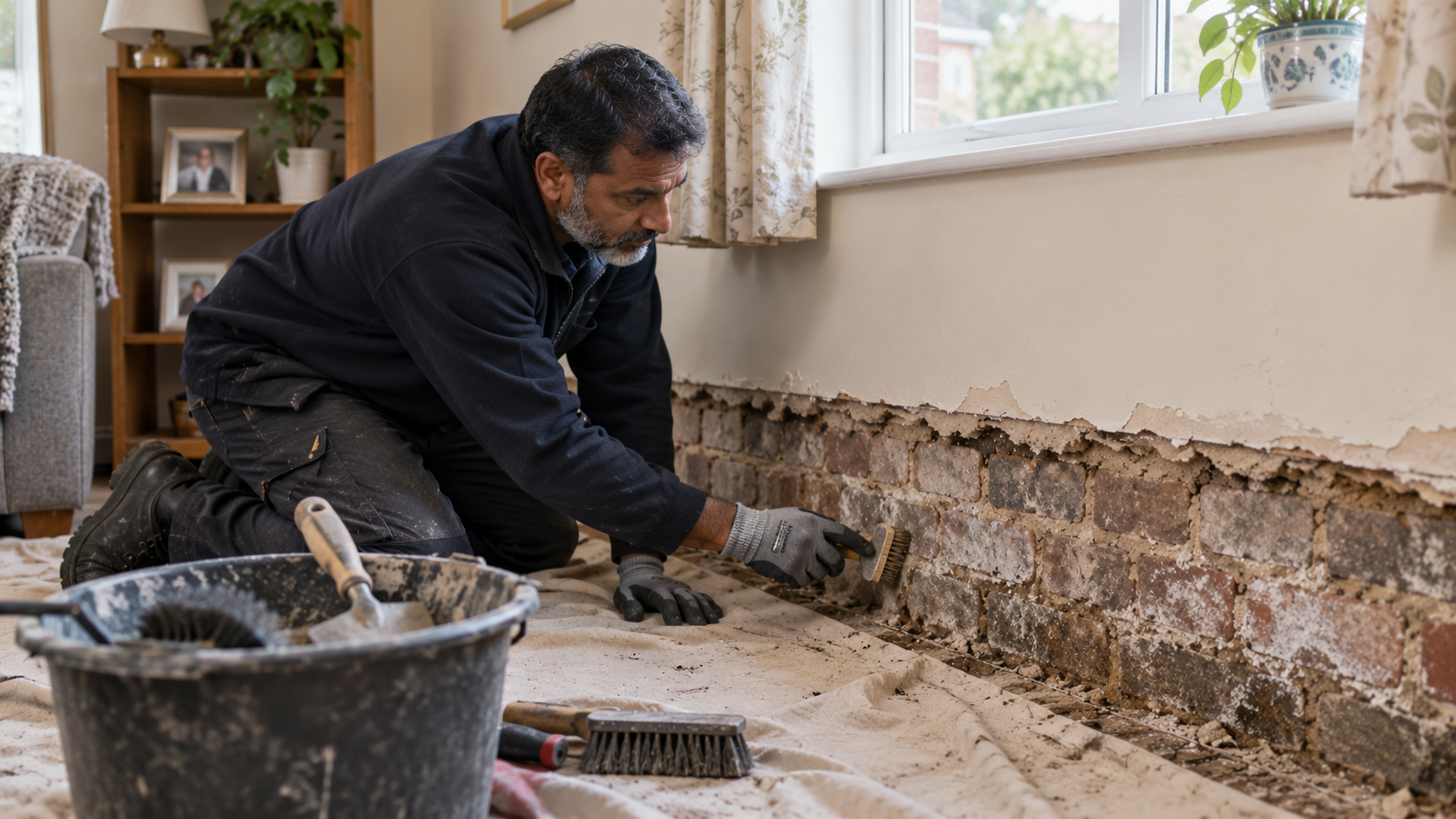
Remove obvious bridges first
High ground, render across the DPC and cavity debris can bypass an otherwise sound barrier. Correcting those details may be central to the repair.
Restore or introduce a DPC where needed
Depending on construction, treatment may involve a chemical system or, less commonly, physical work to introduce a new barrier. The specification should explain why the chosen method suits the wall.
Deal with contaminated plaster
Where salts are established, simply allowing the wall to dry may not produce a clean finish. Remedial plaster work may form a significant part of the job.
Allow for drying and redecoration
Thick masonry does not dry instantly. A sensible specification should address suitable finishes and timing rather than promising an immediate cosmetic result.
Want somebody local to look at it?
If you would rather have the damp investigated in person, you can use our help page to describe the problem and decide what sort of specialist you need.