Practical help with damp walls
Is it really rising damp?
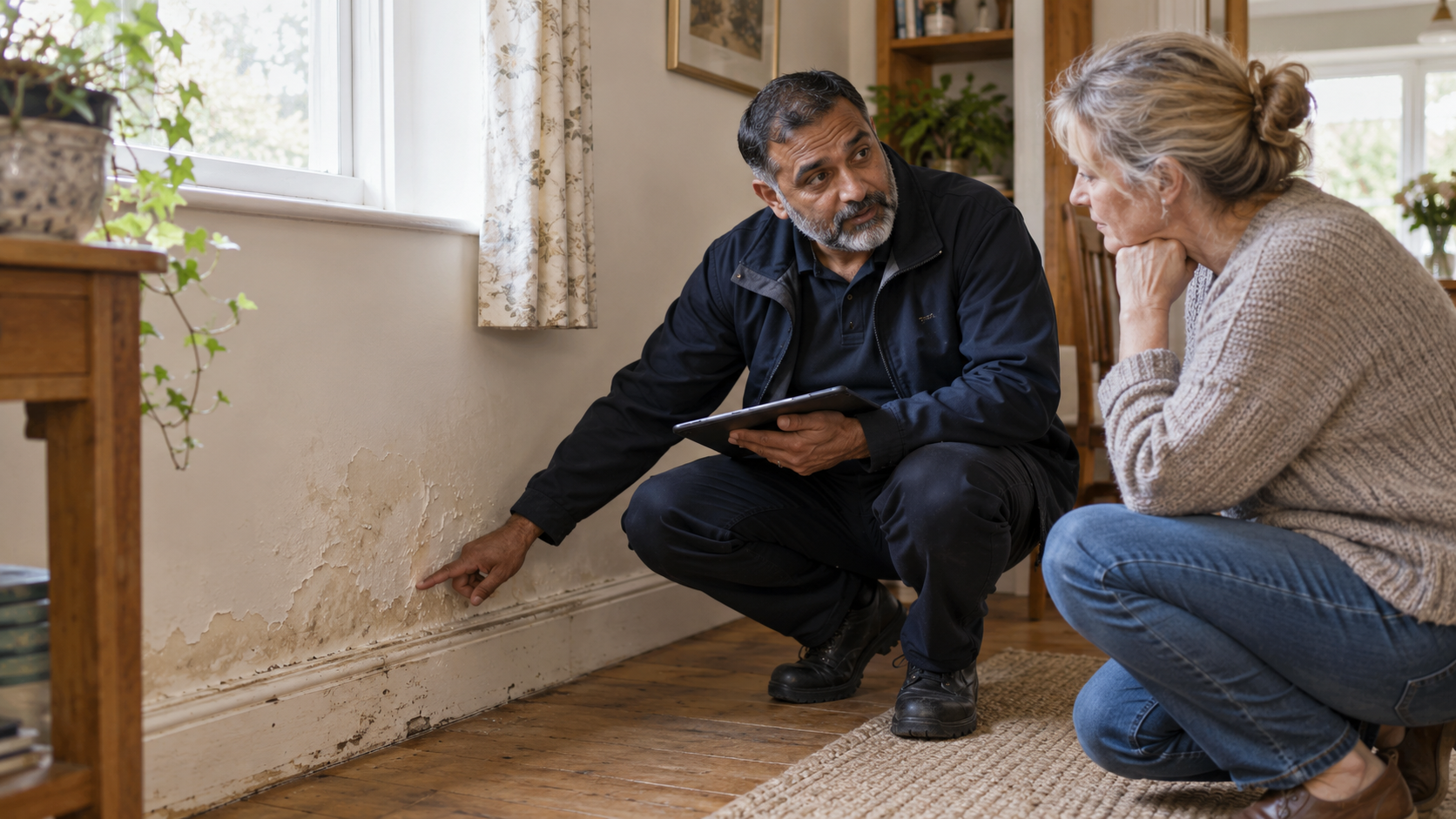
Damp at the bottom of a wall can be rising damp, but it can also come from high ground, a leaking pipe, rainwater, cavity debris, condensation or old salt-contaminated plaster. This site helps you work out what deserves checking before anybody starts treatment.
Start with the symptom
What are you seeing?
The pattern of damp usually tells you where to look next. These guides deal with the situations that most often cause confusion.
Damp at the bottom of a wall
See which signs support rising damp and which point somewhere else.
Check the signs →Damp after rain
Rain penetration and drainage faults can imitate rising damp surprisingly well.
Compare the causes →Wall still damp after treatment
Drying, salts and unresolved bridging can all keep a wall looking wet.
Why it happens →Damp skirting boards
A local wet section can be useful evidence about the moisture source.
What to check →Damp chimney breast
Old salts, rain and condensation make chimney damp a special case.
Read the guide →The details that change the diagnosis
Look outside as well as inside
A path laid too high, render continuing into the ground or a blocked air brick can explain damp that looks mysterious from the room side.
- Can you see the damp-proof course?
- Is paving or soil close to it?
- Does the wall get worse after heavy rain?
- Are there drains, gullies or downpipes nearby?
- Has the floor or outside ground been altered?
A moisture meter is not a diagnosis
Handheld meters are useful for comparing areas and finding patterns. Salts, metal and different plaster materials can affect the reading, so a high number by itself does not prove moisture is rising from the ground.
Treatment
If it is rising damp, what happens next?
A proper repair may involve more than a DPC. Bridging, contaminated plaster, floors and nearby timber can all affect the specification.
Damp-proof courses
Physical and chemical barriers, plus the ways moisture can get around them.
DPC guide →Chemical injection
When injection can be appropriate and the questions worth asking.
How injection works →Plaster and salts
Why the wall can still look damp after the source has been reduced.
Damp plaster guide →Would you rather have somebody inspect it?
Use our help page to describe what you are seeing and what has already been checked. Local independent contractors may be able to quote for appropriate work.
More guides