Rising damp guide
Damp Skirting Boards
A soft or swollen skirting board tells you that moisture has been present, but not where it came from. Its position can nevertheless help narrow the investigation.
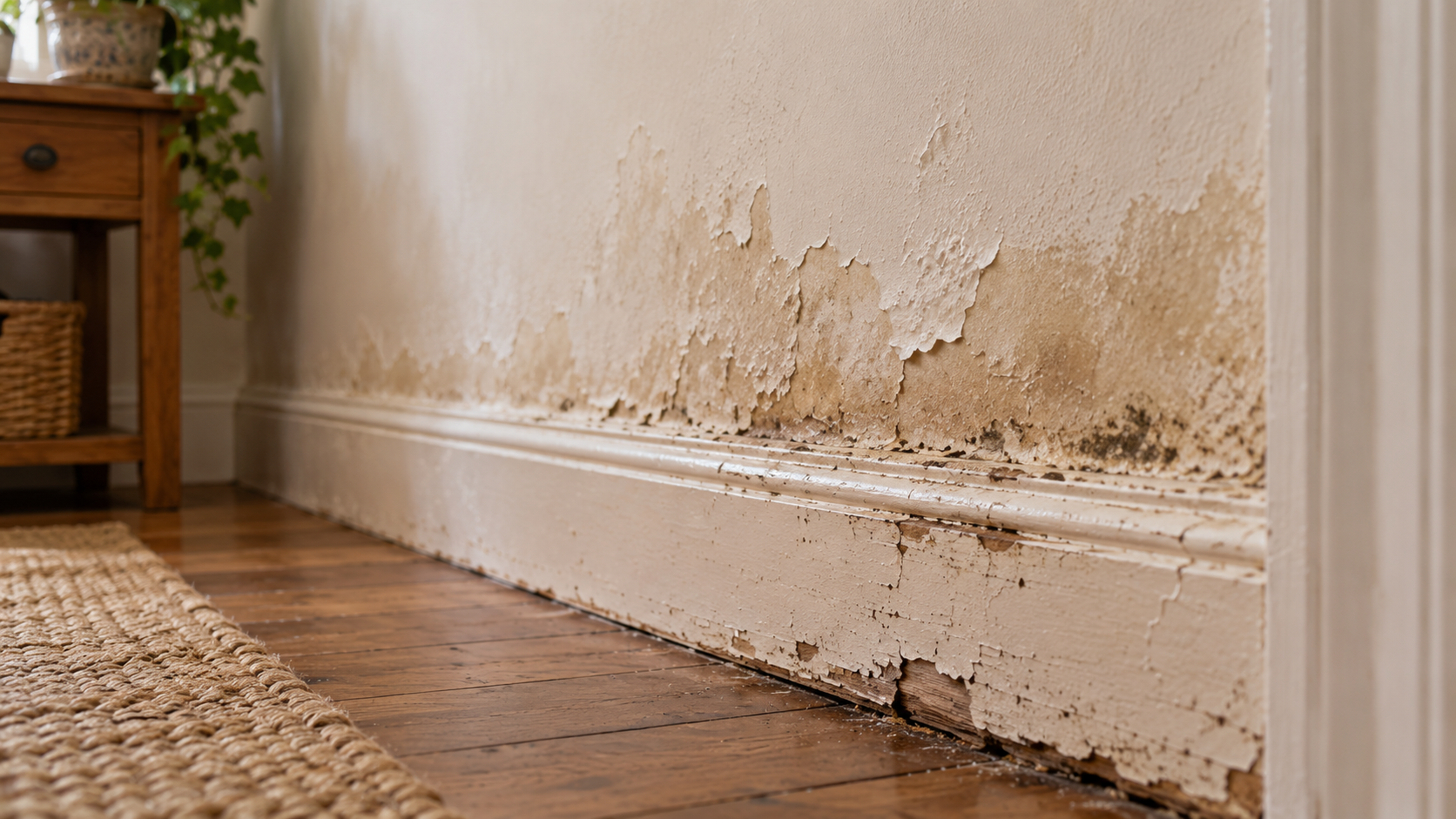
Rising moisture can affect embedded timber
Where skirting remains in contact with persistently damp plaster or masonry it can swell, lose paint and eventually decay.
One short damaged section deserves a local search
If only a metre of skirting is affected, look for a nearby pipe, radiator valve, bathroom fitting or external water source before assuming the whole wall needs damp-proofing.
Check behind rather than covering it
Replacing the timber without dealing with wet plaster behind it can hide the evidence for a while. Removing a small section can reveal salt, plaster condition and the wall surface beneath.
Floors may need attention too
On suspended timber floors, joist ends and floorboards close to a persistently damp wall can be worth checking, particularly if the floor feels soft or springy.
Want somebody local to look at it?
If you would rather have the damp investigated in person, you can use our help page to describe the problem and decide what sort of specialist you need.