Rising damp guide
Moisture Meters and Rising Damp
A moisture meter is useful equipment, but pushing two pins into plaster and seeing a high number does not establish that water is rising from the ground.
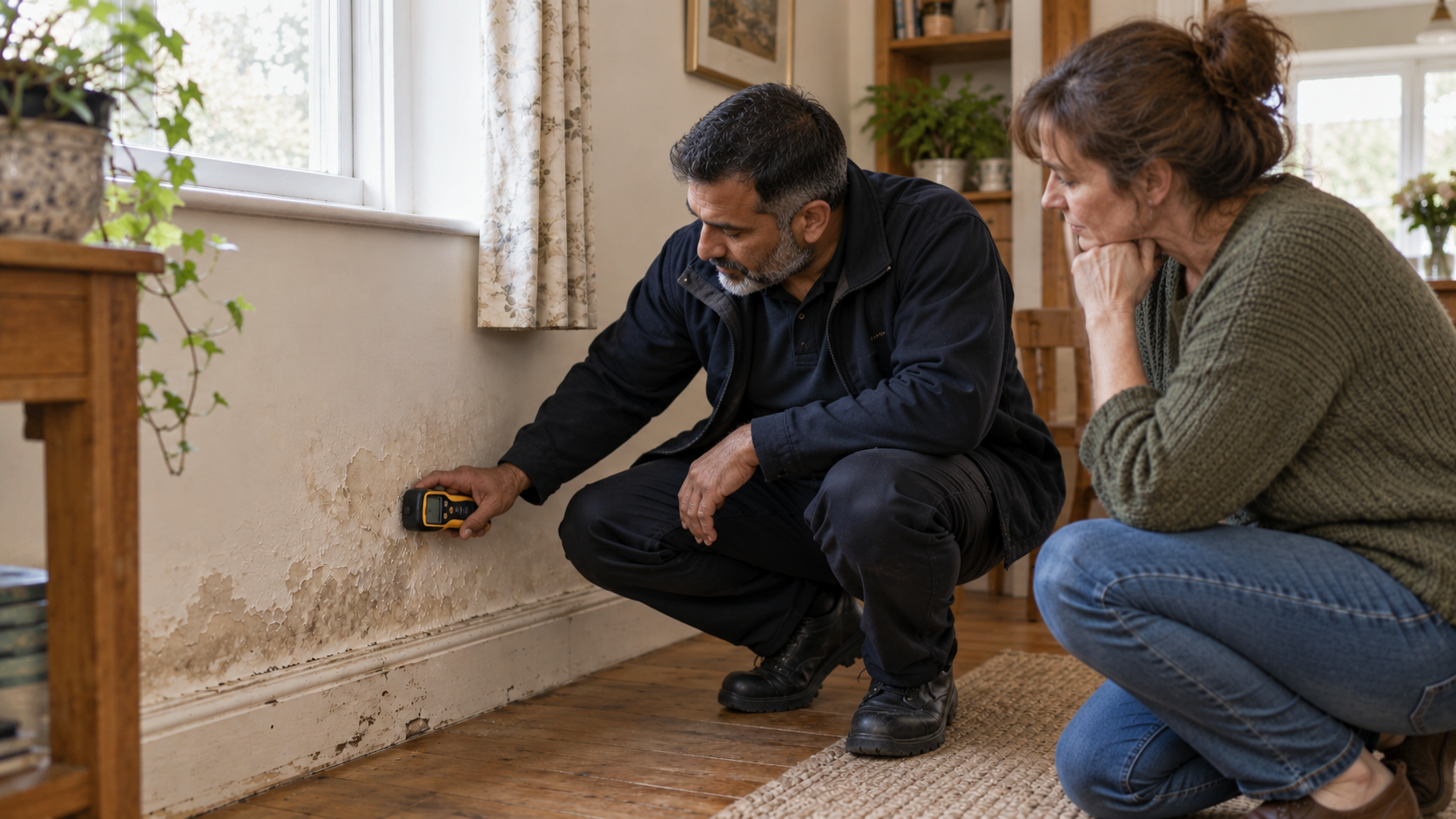
What the common meters measure
Many meters respond to electrical properties rather than directly measuring a percentage of water in plaster. Different materials and salts can therefore change the reading.
Where meters are useful
They are valuable for comparing areas, following patterns and identifying places worth investigating more closely. Repeated readings can also help build a picture rather than relying on one isolated point.
Why context matters
A high reading beside a leaking pipe means something different from a graduated pattern across a wall with visible salt damage and a bridged DPC outside.
More detailed testing
Where the diagnosis is disputed or important, a specialist may use methods that investigate moisture within the masonry rather than relying solely on surface readings.
Want somebody local to look at it?
If you would rather have the damp investigated in person, you can use our help page to describe the problem and decide what sort of specialist you need.